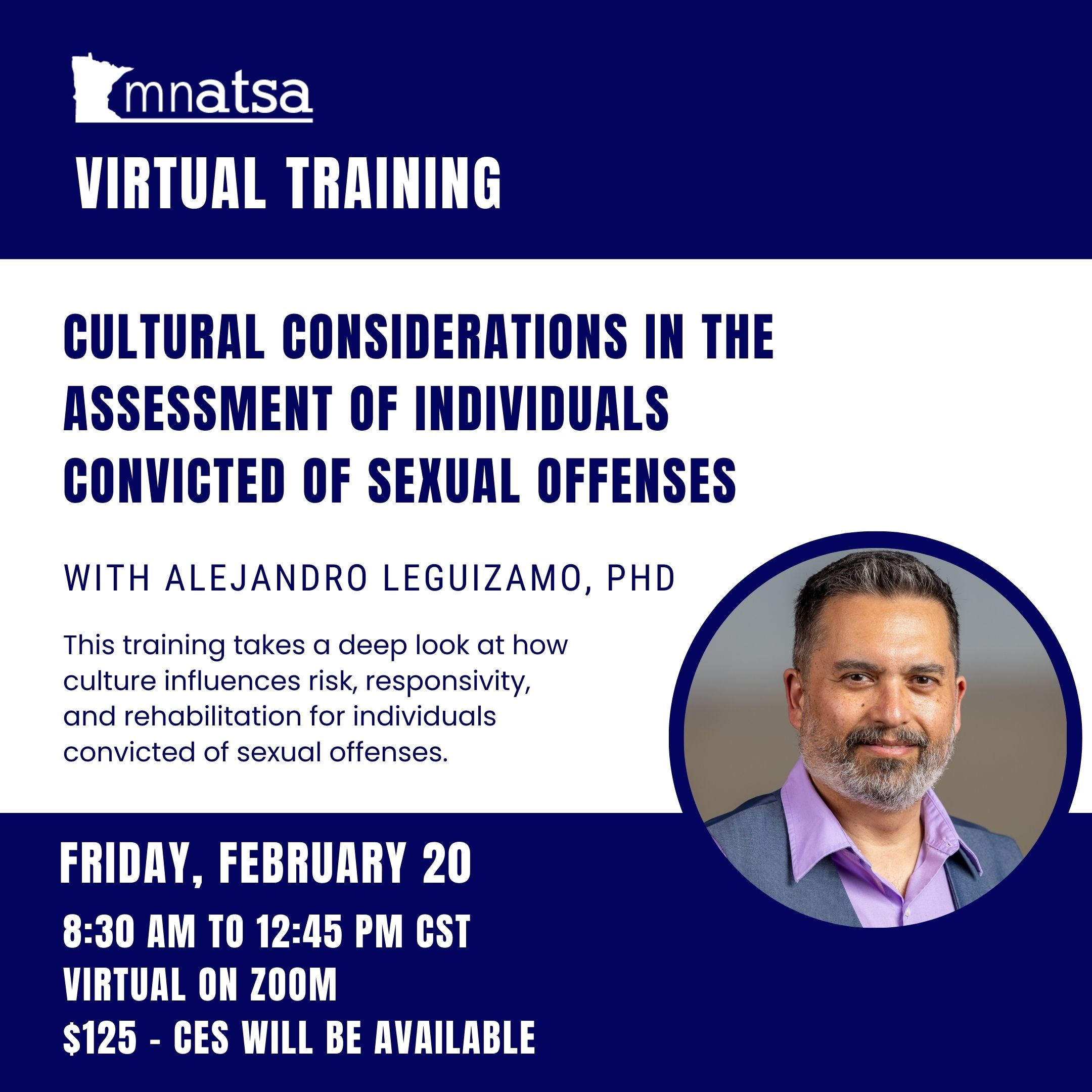
Cultural Considerations in the Assessment of Individuals Convicted of Sexual Offenses
Presenter: Alejandro Leguizamo, PhD
Date: Friday, February 20, 2026
Time: 8:30 AM – 12:45 PM (CT)
Location: Online – Zoom
Cost: $125
CEs: 4 hours (applications pending with the MN Board of Psychology, MN Board of Social Work, MN Board of Behavioral Health and Therapy, and MN Board of Marriage and Family Therapy)
Training Overview
Sexual aggression is a global phenomenon, yet the cultural values, norms, and community structures surrounding individuals can meaningfully shape both risk and protection. This training examines how cultural context can—and should—inform the assessment of individuals convicted of sexual offenses.
Dr. Alejandro Leguizamo will explore how integrating cultural information enhances accuracy, supports meaningful case conceptualization, and reinforces ethical, culturally responsive practice. Participants will examine how cultural values, family systems, neighborhood/community dynamics, and interactions with legal and social systems influence both pathways into offending and pathways toward rehabilitation.
This training emphasizes balanced assessment: not only identifying culturally influenced risk factors but also understanding cultural strengths, supports, and protective elements that can help individuals avoid future harm.
What We’ll Cover
-
How cultural values and practices can contribute to or protect against sexual aggression
-
How to incorporate cultural information from multiple sources, including the individual, family, community members, clergy, and collateral systems
-
How cultural context shapes risk, responsivity, and rehabilitation within justice settings
-
How to assess strengths at the individual, familial, cultural, and community levels that can be supported to reduce future risk
Learning Objectives
By the end of this training, participants will be able to:
-
Identify cultural competence assessment practices across psychosocial interviews and standardized measures.
-
Recognize cultural values or practices that may increase vulnerability to sexual aggression or serve as protective factors.
-
Integrate cultural factors into assessment approaches, with emphasis on identifying strengths and supports that can reduce future sexual aggression.
Register for this training below!